
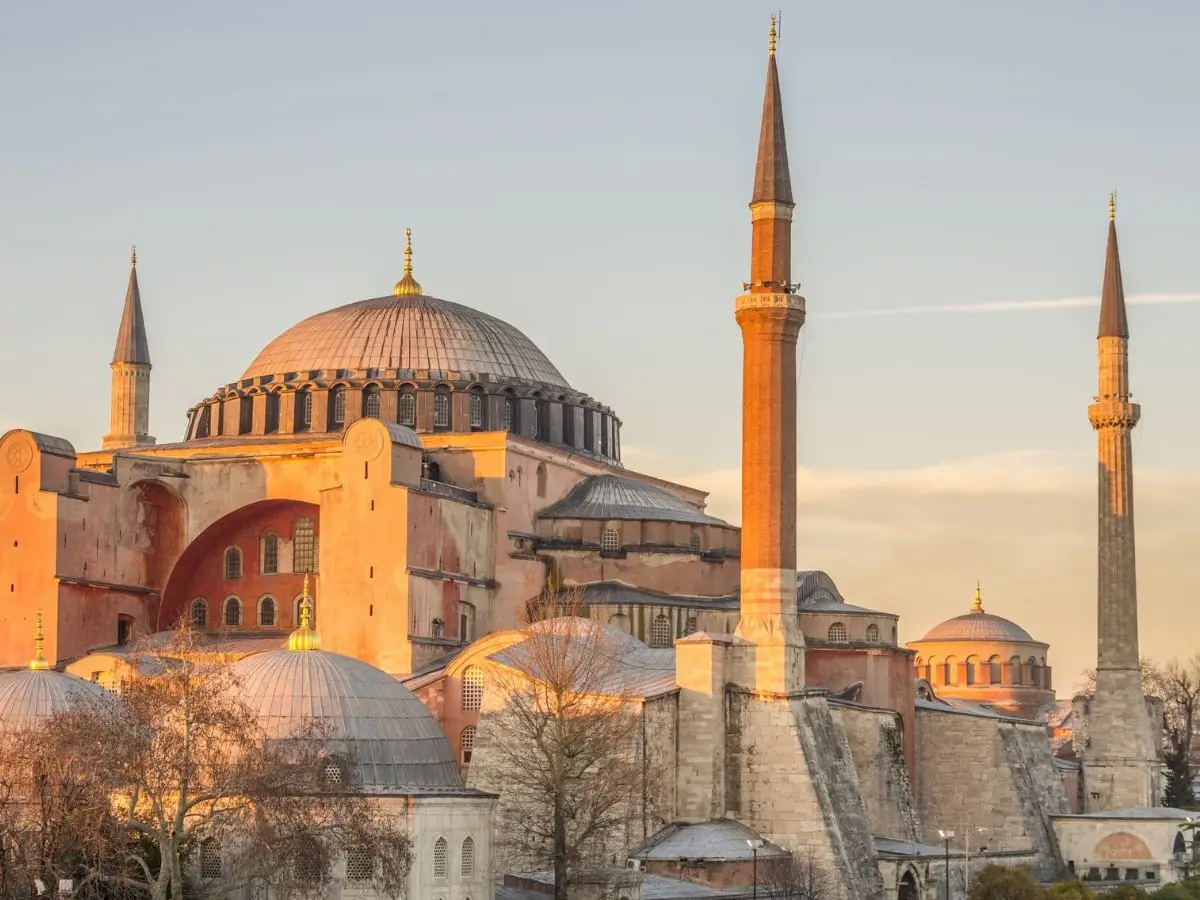
Why Hagia Sophia Is Istanbul’s Unmissable Experience
Few buildings on Earth tell a story as layered as Hagia Sophia. Known internationally as the Hagia Sophia Mosque or St. Sophia, this extraordinary structure has stood at the heart of Istanbul for nearly 1,500 years — serving as a Byzantine cathedral, an Ottoman mosque, a secular museum, and since 2020, an active mosque once again.
This guide covers everything you need to know before visiting: history spanning three eras, 2026 visiting hours, dress code, architectural highlights, nearby attractions in Sultanahmet, and how to get from Istanbul Airport to Sultanahmet by VIP transfer.
History of Hagia Sophia: Three Eras, One Building
Byzantine Cathedral (537–1453)
The current structure was commissioned by Emperor Justinian I and completed in 537 AD. For nearly a thousand years it was the world’s largest cathedral and the spiritual center of Eastern Orthodox Christianity. Designed by Anthemius of Tralles and Isidorus of Miletus, its dome spans 31 meters and rises over 55 meters.
Ottoman Mosque (1453–1934)
After the 1453 conquest, Sultan Mehmed II converted the cathedral into a mosque. Minarets, a mihrab, minbar, and Islamic calligraphy panels were added. The Ottomans covered the Byzantine mosaics with plaster rather than destroying them — preserving them for centuries.
Museum and Mosque Again (1934–Present)
In 1935 Atatürk converted the building into a museum. In July 2020 it was reclassified as an active mosque. Today it is open to visitors of all faiths.
Architectural Highlights
The Central Dome
Spanning 31 meters and rising over 55 meters, the dome appears to float above the nave — an illusion created by 40 arched windows at its base.
Byzantine Mosaics
Gold tessera mosaics survive in the upper galleries. The 13th-century Deisis mosaic depicting Christ, the Virgin Mary, and John the Baptist is considered one of the finest examples of Byzantine art.
Ottoman Calligraphy Medallions
Eight massive calligraphy medallions inscribed with the names of Allah, Prophet Muhammad, the first four caliphs, and Hasan and Husayn hang from the upper walls. Each is 7.5 meters in diameter.
The Weeping Column
A bronze-clad column on the ground floor has a thumb-sized hole. Legend says if you insert your finger and feel moisture, your wish will come true.
Visiting Hours and Admission (2026)
The main prayer hall is free to enter. The upper gallery (Byzantine mosaics) requires a separate ticket.
| Day | Open to Visitors | Notes |
|---|---|---|
| Monday – Sunday | 09:00 – 19:00 | Temporarily closed during prayer times |
| Friday | Limited access | Closed during Friday prayers (~12:30–14:00) |
Dress Code
- Women: Hair, shoulders, and knees must be covered. Free headscarves available at entrance.
- Men: Long trousers and covered shoulders required.
- Everyone: Shoes removed before entering the prayer area.
Nearby Attractions in Sultanahmet
- Blue Mosque: Directly opposite, 2-minute walk
- Topkapi Palace: 5-minute walk
- Basilica Cistern: 3-minute walk
- Grand Bazaar: 15-minute walk
- Istanbul Archaeological Museums: Next to Topkapi Palace
Getting from Istanbul Airport to Hagia Sophia
With a VIP private transfer, you reach Sultanahmet from Istanbul Airport (IST) in approximately 40–50 minutes. Your driver meets you at arrivals, handles your luggage, and drives you directly to your hotel. Fixed price, flight tracking, free cancellation.
Book your airport transfer now →
Frequently Asked Questions
Is Hagia Sophia still a mosque in 2026?
Yes. It was reclassified as an active mosque in July 2020.
Is there an entrance fee?
The main prayer hall is free. The upper gallery requires a separate ticket.
How long should I spend visiting?
Most visitors spend 45–90 minutes. Allow 2 hours for the mosaics gallery.
Best way from Istanbul Airport to Hagia Sophia?
VIP private transfer — approximately 40–50 minutes door-to-door. Book here.
Related Guides
- Transfer Fares & Prices — Fixed prices for all Istanbul routes
- Our Vehicle Fleet — Mercedes Vito, V-Class, Sedan and Minibus
- Istanbul Airport to City Center Guide
- Hagia Sophia Visitor Guide
- Wedding Transfer Service Guide
- All Travel Guides